
Consent Documents
Consent for Endodontic Treatment
(Root Canal Treatment)
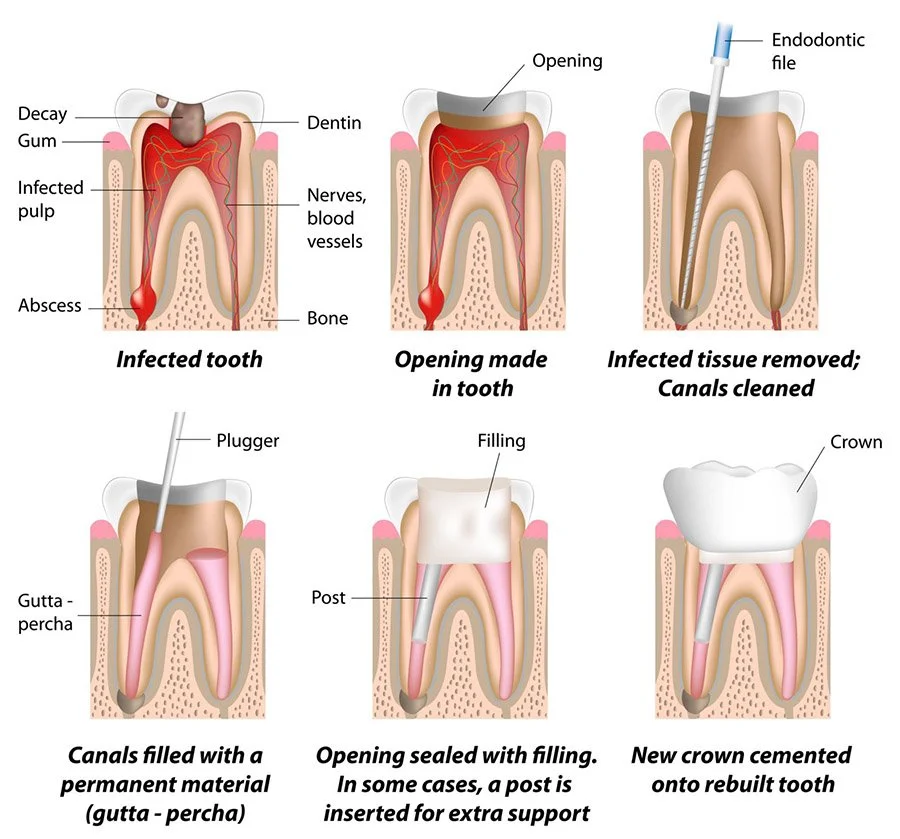
I understand Root Canal Treatment is a procedure to remove infection or inflammation to keep a tooth which may otherwise require extraction. Although root canal therapy has a very high degree of clinical success, it is still a biological procedure, so it cannot be guaranteed.
I am aware I have the option of no treatment, antibiotic treatment (temporary solution only), referral to a specialist endodontist or extraction.
I have been informed that I require an endodontic procedure (root canal treatment) and that I fully understand the following:
1. Failure to follow this recommendation can result in:
a. The loss of the tooth.
b. Bone destruction due to an abscess.
c. Possible systemic (affecting the whole body) infection although this is very rare.
2. A certain percentage of (5-10%) of root canal treatments fail especially in teeth with complicated root anatomy, and may require retreatment (may require referral to a specialist), periapical surgery or even extraction.
3. During instrumentation of the tooth, an instrument may separate and lodge permanently in the tooth or an instrument may perforate the root wall. Although this rarely occurs, such an occurrence could cause the failure of the root canal and the loss of the tooth. I understand that I have the option to see a specialist endodontist who may be able to remove any separated instrument and complete the root treatment and this will be at an additional cost.
With upper teeth there is a very small risk of perforation into the sinuses which may require surgical correction by a specialist surgeon (at additional cost) or in the hospital setting.
4. When making an access (opening) through an existing crown or placing a rubber dam clamp, damage could occur, and a new crown may be necessary after endodontic therapy (at additional cost).
5. Successful completion of the root canal procedure does not prevent future decay or fracture. After root canal treatment the tooth is prone to fracture even if the root treatment is successful.
6. Temporary fillings are usually placed in the tooth immediately after the root canal treatment. Teeth which have had root canal treatment will require a permanent (outside) restoration. This may involve a filling or more extensive restorative work (pins, post, crown build-up, crown) depending on the clinical status of the tooth.
7. There are risks involved in administration of anaesthetics, analgesics (pain medication) and antibiotics. I will inform the dentist of any previous side-effects or allergies.
Note: Antibiotics may decrease the effectiveness of birth control medication. Additional methods of birth control should be used while on antibiotics.
After consideration of the above I consent to root canal treatment.
Consent for Tooth Whitening
My dentist has informed me that my teeth can be treated by tooth whitening.
I am aware that I may take as much time as I need and I have the right to ask questions about any procedure before making my decision about giving my informed consent on this form.
As with any treatment there are benefits and risks. The benefit is that tooth whitening is a minimally invasive improvement of the appearance of teeth. It has not been shown to reduce the strength of enamel nor does it cause or promote periodontal disease. Any risk involves the continued use of a peroxide solution for an extended period of time such as a few years. Research indicates that using peroxide to whiten teeth is safe. Although the long-term effects and extent of risk are as yet unknown, acceptance of treatment means acceptance of risk.
I understand tooth whitening is not recommended for pregnant or lactating women, light sensitive individuals, patients receiving UVA radiation therapy for cancer or other photochemotherapeutic drugs or treatment, as well as patients with melanoma, diabetes or heart conditions.
• I confirm that I am unaware of an allergy to hydrogen peroxide or glycerine.
• I understand that whitening treatment cannot be guaranteed and can only be done in a healthy mouth.
• I understand that whitening will lighten my natural tooth substance, although will have limited effect on the tooth colour closest to the gumline.
• Fillings, crowns, veneers, porcelain restorations bridges, denture teeth, implant crowns do not whiten and may need to be replaced afterwards at additional cost.
• The amount of colour change is difficult to predict and people with darkly stained yellow or yellow-brown teeth frequently achieve better results than people with grey or bluish-grey teeth. I understand that teeth with multiple colorations, bands, splotches or spots due to tetracycline use or fluorosis do not whiten as well, may need multiple treatments or may not whiten at all.
• I understand that areas of fluorosis (bright white or yellow patches) may become more visible after tooth whitening and may need additional treatments such as microabrasion, Icon resin infiltration, direct restoration using composite resin and indirect restoration with crowns or veneers. These additional treatments will attract additional fees.
• Whitening may cause sensitivity that is usually temporary and can normally be controlled. Cases of permanent sensitivity are extremely rare. People with existing sensitivity, recession, exposed dentine/ root surfaces, recently cracked teeth, abfractions (micro-cracks), open cavities, leaking fillings, or other dental conditions that cause sensitivity or allow penetration of the gel into the tooth may find that those conditions increase or prolong tooth sensitivity or pain.
• Colour stability varies depending on a number of factors e.g. initial colour of teeth, thickness of enamel (difficult to assess), diet (tea/coffee/red wine/ curries), smoking, alcohol. I understand that the results of whitening treatment is not intended to be permanent and that I will need to maintain the colour of my teeth with top-up treatment using my existing trays. This can vary from 1 week every few months to 1 week every few years depending on the rate of colour fade.
Top-up gel for maintenance can be purchased at the practice.
• I understand that if I lose or damage my whitening trays I will need to pay the full cost of whitening treatment to have them replaced.
• I understand that success of treatment relies on my own compliance with instructions provided.
• I understand that photographs may be taken for the purposes of documentation and illustration of my treatment and in some cases for anonymised social media marketing.
I understand all of the above and consent to tooth whitening treatment.
Consent for Clear Aligner Treatment
(Limited Objectives Tooth Alignment)
This Patient Agreement contains important information about your treatment. This form is intended to make you aware of potential risks associated with Clear Aligners so you can make an informed decision as to whether or not to proceed with treatment.
Please read carefully and ask questions about any areas that are unclear.
BY SIGNING THIS PATIENT AGREEMENT, YOU ACKNOWLEDGE THAT YOU HAVE READ AND AGREE TO ALL OF THE TERMS AND CONDITIONS CONTAINED HEREIN.
What are Clear Aligners?
Clear Aligners consist of a series of clear, removable, plastic trays that move your teeth in stages to achieve the desired outcome.
Scope of Treatment:
Our objective is to straighten your visible teeth, usually without significant bite change, in a ‘reasonable’ time frame. You may have aspects of your bite that may not be addressed with this treatment, such as, but not limited to, molar relationships/ posterior cross-bite, overjet or underjet (horizontal overlap), facial profile, TMJ problems, displaced tooth roots, and gum margin levelling. Upper and lower dental midlines will not be made to coincide for most cases as midline changes often require years of treatment.
Full correction of all these items can often involve years of orthodontic treatment with a specialist orthodontist. The goal of this limited objectives orthodontic treatment is to correct your chief cosmetic complaints, which you have shared with us. This treatment is not a replacement for traditional comprehensive orthodontic treatment. This treatment is an alternative for people who are not interested in traditional comprehensive orthodontic treatment and are seeking a more cosmetically focussed orthodontic treatment option that can be provided over a shorter period of time.
Benefits of Aligner Treatment over conventional bracket treatment:
• Less noticeable when you are wearing them
• Generally more comfortable than braces that use wires and brackets.
• Removable, allowing you to brush and floss your teeth as you would normally.
• Allow you to eat and drink normally posing less restrictions on your diet compared with fixed braces.
What’s Included:
Radiographs (x-rays) as required
Alignment of teeth as planned
1 refinement phase to finish off the case (this will delay completion of the case)
Enamel manicuring at the end of treatment (reshaping the edges of your teeth)
Fixed retainers per arch of treatment
Removable retainer per arch of treatment
Tooth Whitening
Composite or Edge bonding, or other cosmetic enhancements including porcelain veneers following alignment will be charged additionally.
Technique:
Your dentist will likely carry out a full dental examination which may include x-rays and photographs. Your dentist make moulds using impressions digital scans.
A simulation will be provided for your approval and then your aligners will be fabricated.
Tooth-coloured buttons may be placed to help your teeth to move. These will be removed on completion of treatment.
You will be required to wear each aligner for 7-10days.
In cases where teeth are crowded, space will be made between your teeth by enamel reproximation (minor tooth reduction). This allows tooth movement in the area of the crowding. Rarely, sensitivity is possible from this, but is transient and not common. Alternative options to enamel reproximation for creating space include tooth extraction, which are used in extreme cases of crowding.
You will have tooth-coloured buttons placed on your teeth during treatment to aid movement. These will be removed at the end of treatment.
Standard of Straightness:
We seek to straighten teeth to a high level with cosmetically focussed orthodontic treatment and any cosmetic orthodontic treatment may require refinements if teeth do not move as predicted. This will increase the overall treatment time.
If numerous custom requests arise which the dentist feels will take an inordinate amount of extra time or in fact may not even be possible to achieve, we reserve the right to refer you to an orthodontic specialist for conventional comprehensive, 2-3year, bite-changing orthodontic treatment, without a refund of monies paid up until that point in treatment.
Hygiene:
BRUSH YOUR TEETH and GUMS thoroughly before placing your aligners. Poor oral hygiene can result in puffy, bleeding gums and permanent white spots on teeth. INFLAMMATION AND BLEEDING GUMS WILL DELAY YOUR TREATMENT. Interproximal brushes or floss are the best way to clean between your teeth at the gum line. We reserve the right to suspend or delay treatment if your oral hygiene is poor. Keep your teeth and aligners clean!
Clean your aligners with a toothbrush and COLD water. Do NOT use toothpaste to clean your aligners.
Cleanings:
You should have at least one professional cleaning during your treatment. If you have an appointment for a cleaning scheduled, keep it! This is not required but highly encouraged. (Fees applied separately)
Eating/ Drinking:
You will need to wear your aligners as much as possible - approximately 22 hours per day. They must be removed for eating/ drinking and cleaning your teeth.
DO NOT EAT with your aligners in place and drink only cold water. Try and rinse after meals if possible before replacing your aligners.
Consuming sugary food/ drinks with aligners in placed increases risk of tooth decay and/or gum disease.
Soreness:
At the start of treatment and when you change to a new aligner, your teeth may be sore. This is normal and will not damage your teeth.
Aspirin, Paracetamol or Ibuprofen may be taken to relieve this. If the soreness prohibits eating even soft food, please phone for an appointment so any necessary adjustments can be made.
A Cephalometric X-ray will not be taken:
A cephalometric x-ray is usually taken in association with traditional comprehensive orthodontics and shows the relationship of the skull, skeleton and teeth. This type of x-ray does not provide us with essential information for performing cosmetic tooth alignment and is therefore not typically taken in association with cosmetic tooth alignment. By signing this consent form, you understand that this type of x-ray will not be part of your pre-treatment records.
Potential Risks Associated with Aligner Treatment:
As with many dental treatments, there are some risks associated with aligners that you should be aware of. Most of these have been outlined below. Please make sure you read the below bullet points carefully and discuss with your dentist any sections which you feel require further explanation or clarification.
• Some medical conditions and certain types of medications can affect orthodontic treatment. It is important that you disclose your current and past medical details to your treating dentist
• Occasionally you may find that certain areas of the aligner can dig into the gums, cheeks or lips leading to mild abrasions or scratches. If you notice that there is a persistent sharp or rough edge on any of the aligners, then it is advisable to contact your dentist so this can be adjusted
• If you do not wear the aligners for the minimum number of hours per day, do not care for the aligners as directed by your dentist or miss your review appointments, this can lead to an increase in the time taken to complete treatment and may impact upon the results achieved
• Aligners may be less effective in moving teeth which are small or unusually shaped
• Some people may notice that their speech is slightly altered or that they are talking with a slight lisp. This is normally temporary and transient and should resolve within a few days.
• Some patients have reported that they experience increased saliva in their mouth or that their mouth is dryer than normal. Again, this is likely to be temporary and should resolve within a short period
• If your attachments fall off, they may need to be replaced. Please let your dentist know if this happens
• If you grind your teeth, especially while sleeping, you may notice that the aligners start to show signs of wear. This should not affect the ability of the aligners to move your teeth however please mention this to your dentist of you have any concerns.
• In certain cases where the treatment is overly complicated, you may be advised of the use of additional orthodontic methods where the use of aligners alone will not be sufficient to achieve the desired outcome. Your dentist will discuss with you any additional treatments that may be required.
• Occasionally when straightening teeth which are overlapped and more triangular in appearance the gum may not completely fill the space between the teeth leading to the appearance of a “black triangle”. If this is of concern to you then additional treatment may be required to correct this gum deficiency.
• During and following treatment you may notice that your bite has changed. This is not unusual and should settle in time
• You my notice that there is increased gum recession around certain teeth after treatment
• If you have fillings or crowns in your mouth it is possible that they could become dislodged requiring them to be re-cemented or replaced
• The roots of your teeth may shorten slightly during orthodontic treatment. In most cases this has no negative long-term effects but very rarely some people will get more root shortening than is considered normal or safe. In this case treatment may need to be stopped early. If it appears that you are susceptible to this, then your dentist will discuss the options available to you
• In rare circumstances, a tooth that has a previously damaged nerve either by decay, a deep filling or by a bump or fall may end up having to be root treated. If you experience any severe, dull aches or pains around any individual tooth you need to discuss this with your dentist. Management of this will be at additional cost
• Any tooth movement carries a risk of loss of bone support around the teeth. In the majority of cases this bone loss will not affect the mobility of the teeth in the long-term however, in some cases this slight increase in mobility can be on-going
• It is possible in certain circumstances such as severe crowding or where there are missing teeth that the aligner could break. Please contact your dentist immediately if this happens. If the aligner breaks into small pieces, it is possible that these small parts may be accidentally swallowed or breathed in
• In rare instances, you may get symptoms from your jaw joints near your ears. Symptoms can include jaw pain, clicking, headaches or problems opening your mouth fully and or moving your jaw freely. Such symptoms are very unlikely to be related to orthodontic treatment but if you do experience this, it should be discussed with your dentist
• Many patients suffer from TMD (Temporo-Mandibular Dysfunction) which is problem associated with the jaw joints. While there is no confirmed link between orthodontic treatment and jaw pain or dysfunction, jaw pain could worsen.
• In very rare cases some people may develop allergic reactions to the aligner material
Retention:
Teeth have a tendency to rebound to their original positions after orthodontic treatment. Very severe problems have a higher tendency to relapse, and the most common type of relapse occurs with twisted (rotated) teeth. Fixed retainers will be placed behind your front teeth, and in addition you will be required to wear removable retainers also. Full co-operation in wearing these appliances (night-time for 12 months, and every other night indefinitely) is essential. There is a fee to maintain fixed retainers as well as to replace lost or broken removable retainers.
Retention is a life-long commitment.
Disputes:
Should any dispute arise regarding fees, treatment, its outcome, or other matters associated with treatment, I agree to seek resolution through arbitration (peer review process) in lieu of court in order to seek a speedy and fair resolution of such issues. By signing this consent form, I am agreeing to handle any dispute that might arise as a result of treatment through a dental peer review process (arbitration).
Appointments:
Please keep your adjustment appointments! Missed appointments can result in delayed completion. Please notify us at least 48 hours in advance should you need to reschedule since another patient may need this time slot. There can be a fee of at least £25 for all broken appointments or short-notice cancellations. There are some visits that are required after your aligner treatment is complete - retainer checks etc. These visits are very important. Relapse, bite settling, and retainer or splint adjustments (or breakage) are just some of the items we wish to monitor in this stage.
Moving:
If you plan on moving during orthodontic treatment, it is usually advisable to complete treatment with our practice. It would be difficult to change clinicians during treatment.
I HAVE READ THIS PATIENT AGREEMENT AND FULLY UNDERSTAND ITS TERMS.